
Panel Discussion
The analog automation: What is the expectation? What is the reality?
| Organizer: | Zhihua Wang, Tsinghua University, China |
| Co-organizer: | Haikun Jia, Tsinghua University, China |
| Moderators: | Pen-Jui Peng, National Tsing Hua University, Taiwan Haikun Jia, Tsinghua University, China |
Time: 16:00 – 17:40 (UTC+8)
Room: Auditorium 國際會議廳, 10F
Abstract:
The analog design automation idea has a history longer than forty years. Unlike the success of the digital counterpart, the analog design automation has not yet been widely used in the industry. Nowadays, driven by the booming artificial intelligence techniques, the analog design automation is trying to reclaim the spotlight. Is this the right time for the analog design automation? What is the expectation for the analog design automation? What is the reality right now?
Panel List:
- What is the current status of analog automation?
(Zuochang Ye, Tsinghua University, China) - Analog Design: A Sophisticated Automatic Tool or a
Skillful Manual Art?
(Rui P. Martins, University of Macau, China) - What is the expectation for analog automation from
industry’s point of view?
(Christoph Sandner, Infineon, Austria) - Does AI make analog automation different?
(Tetsuya Iizuka, The University of Tokyo, Japan) - Is analog automation the future of analog IC design?
(Jaeduk Han, Hanyang University, Korea)
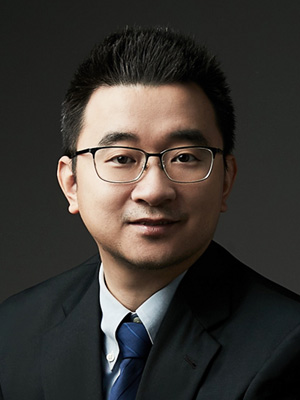
What is the current status of analog automation?
- Zuochang Ye
-
- Tsinghua University
- Date: November 07, 2022 (Monday)
- Time: 16:00 – 17:40 (UTC+8)
- Room: Auditorium (國際會議廳), 10F
Analog design automation is not widely used, and one of the reasons is that analog circuit design is not friendly to automation. Unlike digital designs, most analog designs are firstly done by hand-calculation, and later done using graphical user interface (GUI) which is not friendly to automation. A game changer might be to perform the whole design purely using a domain specific language (DSL) within a special design environment. In this way the whole design flow, including parameter calculation, circuit description, optimization and fine-tune strategy, layout with analog constraints and matching concerns, can be done within the computer-friendly user interface—the code. The design itself is technology-generic and highly parameterized, and once the design is done, which means that the code is finished, it can be reused with no human in the loop when technology and/or the design requirement is changed.
Biography:
Zuochang Ye received Ph.D degree from Tsinghua University. He worked as a research scientist in Cadence Research Laboratories at Berkeley during 2007 and 2008. He is currently an Associate Professor with the School of Integrated Circuits, Tsinghua University. His research interest is Electronic Design Automation (EDA), especially on analog design automation.

Analog Design: A Sophisticated Automatic Tool or a Skillful Manual Art?
- Rui P. Martins
-
- University of Macau, China
- Date: November 07, 2022 (Monday)
- Time: 16:00 – 17:40 (UTC+8)
- Room: Auditorium (國際會議廳), 10F
The ultra-complex infrastructure of IoT with ubiquitous sensing and control capability over a broad number of devices significantly requires a constant update in terms of performance of state-of-the-art electronics. Current developments of portable wireless systems are able to keep efficiently Trillions of gadgets constantly online and urgently call for more advanced ICs, at the core of information and communication technology. Besides the low-power and low-cost requirements, it is necessary to self-power such chips through energy harvesting that dictates high-efficiency fully integrated power solutions to relieve the efforts of battery replacement. Although this opens a vast field of opportunities for analog design engineers it also constitutes a huge challenge for them because it implies a continuous knowledge update to accompany the fast pace of IC technology development down to the nanometer scale. Mixed-signal ASIC design offers engineers the possibility of putting their creativity into practice to obtain innovative solutions. In my personal opinion, AI and Analog Design Automation in this area is almost impossible, because all designs rely in numerous rules, assumptions, procedures, techniques, etc. that only humans can achieve in a Skillful Manual Art with a lot of hard work and also a lot of coffee…
Biography:
Rui Martins, born in 1957, received the Ph.D. in Electrical Engineering and Computers from the Department of Electrical and Computer Engineering, Instituto Superior Técnico, U. of Lisbon, Portugal, in 1992. Since Oct. 1992, he is with the DECE, Faculty of Science and Technology, University of Macau, Macao, China, where he is a Chair-Professor. He authored or co-authored 10 books, 12 book chapters, 50 patents (39 in USA, 8 in China and 3 in Taiwan), 722 papers (329 in scientific journals and 393 in conference proceedings), plus other 70 academic works, in a total of 864 publications. He is an IEEE Fellow (2008), among other duties served as General Chair of the IEEE Asian Solid-State Circuits Conference ASSCC’2019, and was the Founding Director of the State Key Laboratory of Analog and Mixed Signal VLSI in 2011, in Macao, China. His main research interests are in the area of Analog and Mixed-Signal VLSI Design.

What is the expectation for analog automation from the industry’s point of view?
- Christoph Sandner
-
- Infineon, Austria
- Date: November 07, 2022 (Monday)
- Time: 16:00 – 17:40 (UTC+8)
- Room: Auditorium (國際會議廳), 10F
What is the expectation for analog automation from industry’s point of view? Analog circuit generators offer the chance to increase productivity in circuit development. Several promising results of different research teams have been published so far, but we lack a standardization and a common approach to enable a sustainable tooling environment and ecosystem. And we need the right curriculae at Universities in place to educate our engineers with the right skills for the jobs of tomorrow. Is Open-Source the right way to go?
Biography:
Christoph Sandner (IEEE member S‘93-M’95-SM’13) was born in Munich, Germany, in 1968. He received the Dipl.-Ing. degree in electrical engineering from the Technical University of Graz, Austria, in 1995. Since graduation he has been with the Microelectronics Development Center of Siemens AG, now Infineon Technologies, in Villach, Austria. His main interest is in architectures and design of analog and mixed signal circuits, switched mode power supplies and battery management systems. Current focus is on analog design automation.
He was/is member of the technical program committee of several IEEE conferences, including the Custom Integrated Circuits Conference (CICC, 2011-2013), the International Solid-State Circuits Conference (ISSCC, 2013-2016), the International Workshop on Power Supply on Chip (PowerSoC, 2014-2016), the European Solid-State Circuits Conference (ESSCIRC, 2014-now) and the Symposium on VLSI Circuits (VLSI, 2017-2022). Since 2016 he is member of the ESSCIRC/ ESSDERC conference steering committee. He holds more than 20 patents and is author or co-author of more than 40 papers in international journals and conferences.

Does AI make analog automation different?
- Tetsuya Iizuka
-
- The University of Tokyo, Japan
- Date: November 07, 2022 (Monday)
- Time: 16:00 – 17:40 (UTC+8)
- Room: Auditorium (國際會議廳), 10F
This talk briefly introduces some recent researches on standard-cell-based analog design automations as well as neural-network-based transistor-level topology synthesis techniques. Based on these recent advancement, a possible shape of future analog automation is discussed: Does AI really help analog design automation? How can AI learn hidden design skills? Will there be a revival of analog expert systems?
Biography:
Tetsuya Iizuka received the B.S., M.S., and Ph.D. degrees in electronic engineering from the University of Tokyo, Tokyo, Japan, in 2002, 2004, and 2007, respectively. From 2007 to 2009, he was with THine Electronics Inc., Tokyo, Japan, as a high-speed serial interface circuit engineer. He joined the University of Tokyo in 2009, where he is currently an Associate Professor with Systems Design Lab., School of Engineering. From 2013 to 2015, he was a Visiting Scholar with the University of California, Los Angeles, CA, USA. His current research interests include data conversion and frequency synthesis techniques, high-speed analog integrated circuits, digitally-assisted analog circuits and VLSI computer-aided design.
He was a member of the IEEE International Solid-State Circuits Conference (ISSCC) Technical Program Committee from 2013 to 2017 and a member of the IEEE Custom Integrated Circuits Conference (CICC) Technical Program Committee from 2014 to 2019. From 2016 to 2018, he served as the Editor of IEICE Electronics Express (ELEX). He is currently serving as a member of the IEEE Asian Solid-State Circuits Conference (A-SSCC) and IEEE VLSI Symposium on Circuits Technical Program Committees.
He is a recipient of the 21st Marubun Research Encouragement Commendation from Marubun Research Promotion Foundation in 2018, the 13th Wakashachi Encouragement Award First Prize in 2019 and the 18th Funai Academic Prize from Funai Foundation for Information Technology in 2019. He is a co-recipient of the IEEE International Test Conference Ned Kornfield Best Paper Award in 2016.

Is analog automation the future of analog IC design?
- Jaeduk Han
-
- Hanyang University, Korea
- Date: November 07, 2022 (Monday)
- Time: 16:00 – 17:40 (UTC+8)
- Room: Auditorium (國際會議廳), 10F
In contrast to the advances in digital circuit design automation, no significant automation has been made in analog circuit designs. While there have been good reasons to stay with the traditional design methodologies for analog circuits, recent observations indicate that automation techniques must be considered more seriously than ever before for building analog circuits. First, complexities in design rules and process parameters are increasing significantly in advanced technologies, and it becomes much harder to build circuits on time with conventional design flows. Second, auto-generated analog and mixed-signal circuits in recent publications achieve comparable performances with manual designs, justifying the use of automation techniques. Lastly, advances in software development, machine learning, and open-source ecosystems provide further opportunities to overcome challenges in automating analog circuits.
Biography:
Jaeduk Han is an assistant Professor of electronic engineering at Hanyang University, Seoul, Rep. of Korea. He received his B.S. and M.S. degrees in electrical engineering from Seoul National University, Seoul, Rep. of Korea, in 2007, and 2009, respectively, and his Ph.D. degree in electrical engineering and computer sciences from University of California at Berkeley, CA, USA, in 2017. He has held various internship, full-time, and advisory positions at TLI, Altera, Intel, Xilinx, Apple, and SK Hynix, where he worked on digital, analog, and mixed-signal integrated circuit designs and design automations. His research interests include high-speed analog and mixed-signal (AMS) circuit design and automation.



Sponsors

Gold Sponsorship





Silver Sponsorship






Supporters
Sponsors
Gold Sponsorship
Silver Sponsorship